How to Read an Adaptogen Drink Label

Photograph: Adobe Stock, licensed 20 August 2026. This is the whole method: turn it around before it goes in the basket.
You are standing in front of a cooler. Eleven cans, all of them beautiful, all of them promising calm or focus or clarity. Here is how to sort them in under a minute, without trusting a single word on the front.
Check one: where does the adaptogen sit in the ingredient list?
Ingredients are listed by weight, most first. So the order is a ranking whether the brand wants it to be or not.
If the ashwagandha comes after the sweetener, there is less ashwagandha than sweetener. If the reishi is dead last, behind the stevia extract and the orange oil, it is the smallest thing in the can by weight. This is not a trick and it is not a scandal. It is just the label doing its job.
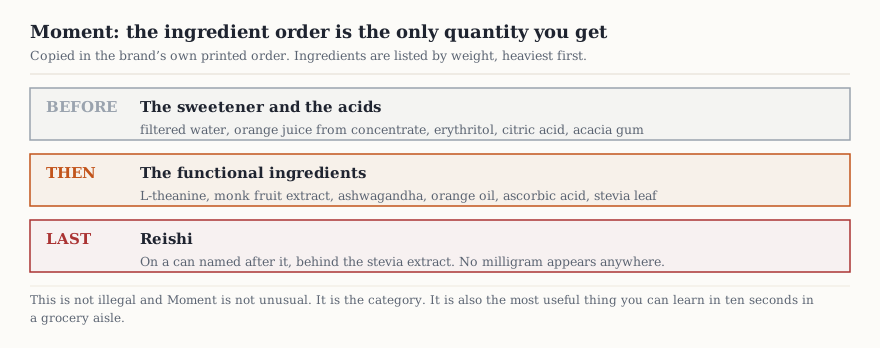
Now look at what a proprietary blend does to that rule.
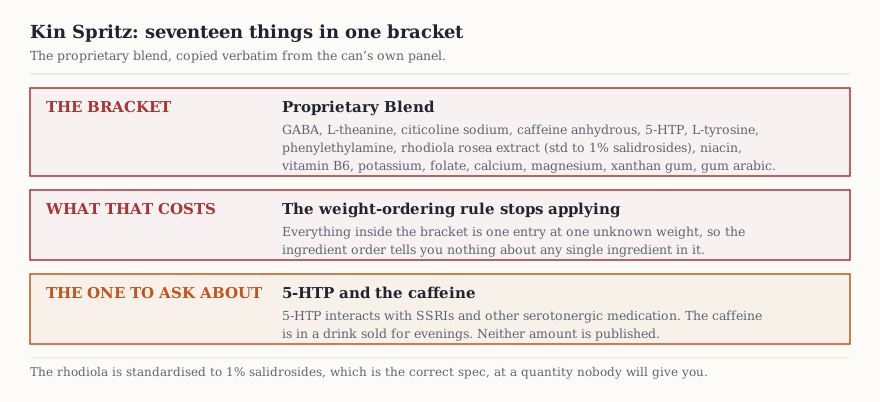
Every active is bundled into one entry, so the weight ordering tells you where the whole blend sits and nothing about any ingredient inside it. That is what a proprietary blend buys the manufacturer: the ordering rule stops applying.
Check two: is there a milligram anywhere?
This is the fastest sort in the category, and it splits everything into four tiers.
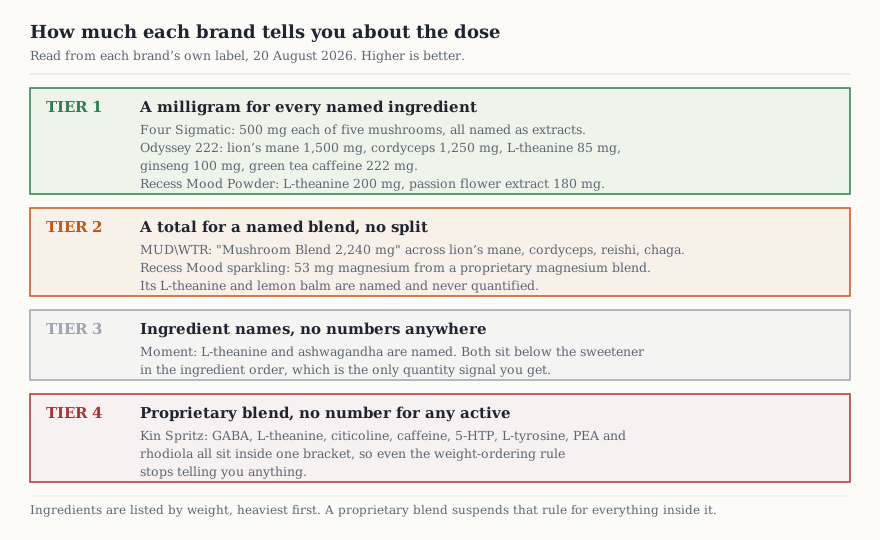
Tier 4 is not a claim that the product is bad. It is a claim that the product cannot be compared. If you cannot compare it, you are buying flavour and branding, and you should pay flavour and branding prices for it.
Tier 2 is the interesting middle. MUD\WTR publishes a real number, 2,240 mg, and then will not split it four ways. Recess publishes 53 mg of magnesium on the can and will not quantify the L-theanine sitting next to it. Both are more honest than a bare ingredient list and less useful than a full panel.
Check three: what part of the mushroom, and is it an extract?
This is where a milligram stops being a milligram. For the functional mushrooms, three very different things get sold under the same name:
- Fruiting body. The mushroom itself. This is what the human trials generally use.
- Fruiting body extract. Concentrated, often with a stated ratio or a beta-glucan percentage. A gram of this is not a gram of powder.
- Mycelium on grain. The root network grown on a grain substrate and milled together with it. The grain does not get separated out, so a large share of the weight is starch.
A label that says “1,000 mg mushroom” and does not say which of those three it is has told you a number without a unit. Four Sigmatic and Odyssey both specify extract. MUD\WTR names its four mushrooms but gives one combined total. Nobody in this set publishes a beta-glucan percentage, which is the number a serious buyer would want and almost nobody prints.
Check four: what did the trials use?
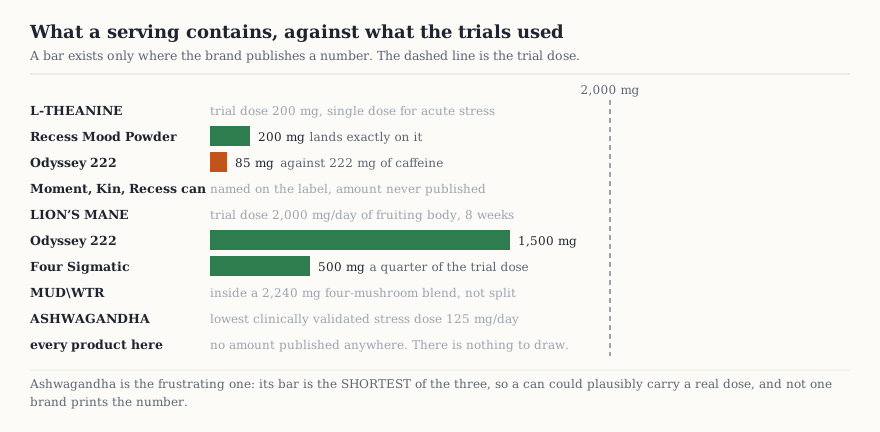
The last step is comparing the number you found to the number the research used. Those are public, and they are smaller than the marketing implies in some cases and much larger in others.
| Ingredient | Doses used in published human trials | What that means in a can |
|---|---|---|
| Ashwagandha | 125 mg/day is the lowest with a controlled trial behind it; 225, 300 and 400 mg/day also studied | A low bar, which is good news, and still no product here publishes its amount |
| L-theanine | About 200 mg as a single dose for acute stress | Recess Mood Powder publishes exactly 200 mg. Odyssey’s 85 mg is under half. Everyone else declines to say |
| Lion’s mane | 2 g/day of fruiting body for eight weeks | Odyssey’s 1,500 mg is in range. Four Sigmatic’s 500 mg is a quarter of it |
Ashwagandha is the interesting one here. Its lowest validated stress dose is 125 mg, which is genuinely small, small enough that a can could plausibly carry a real dose. That makes the silence around it more frustrating rather than less. It would cost a brand nothing to print the number if the number were good.
Check five: price the thing in two places before you buy it
This one has nothing to do with the label and it will save you more money than the other four combined.
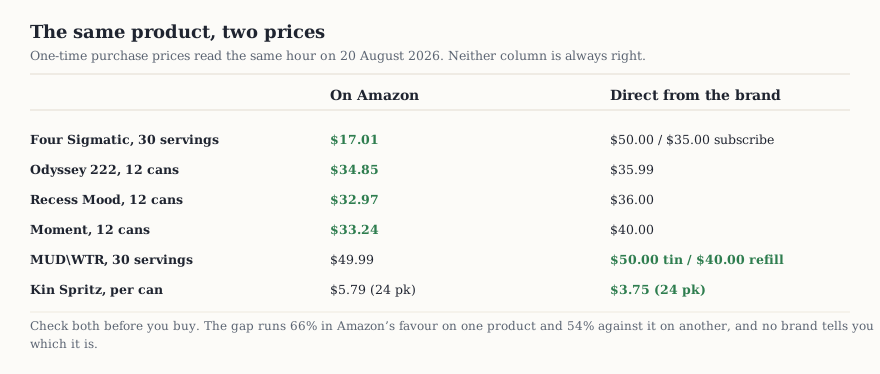
Four Sigmatic’s 30-serving tin is $50.00 on the brand’s own store and $17.01 on Amazon. Kin Spritz works out at $3.75 a can direct and $5.79 on Amazon. Same products, opposite directions, and no brand tells you which way its own gap runs. The full table is here.
Two things that are not on the label and matter anyway
Caffeine is the actual active ingredient in half this category. If a drink makes you feel sharper within twenty minutes, that was the caffeine, not the mushroom. Adaptogens are studied over weeks.
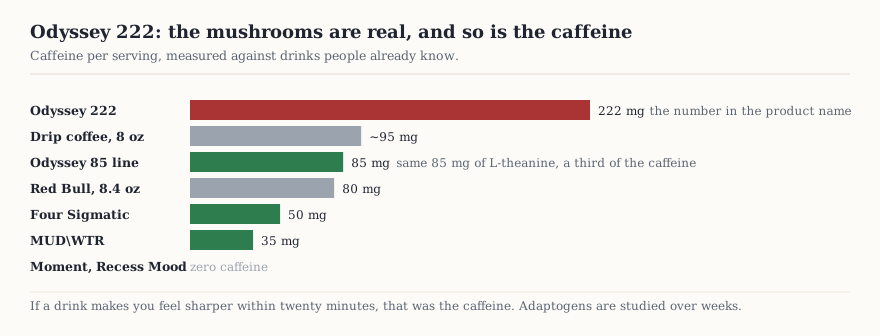
Sugar alcohols do the work in the zero-sugar cans. Moment’s cans carry 6 to 8 g of erythritol. That is how you get a 10 calorie soda that still tastes sweet. It is fine for most people and it upsets some stomachs, and it is worth knowing before you buy twelve of them.
The one-line version
Turn the can around. Find the adaptogen in the ingredient list. If it is below the sweetener and no milligram appears, you are buying a soda with a story, and you should decide whether you want the soda.