Adaptogen Beverages: Start With the Panel, Not the Can
Photograph: Adobe Stock, licensed 20 August 2026. Ingredients shown are illustrative of the category, not a product we rank.
An adaptogen drink is a beverage with a herb or a mushroom in it that is supposed to help your body handle stress. Ashwagandha. Lion’s mane. Reishi. Rhodiola. L-theanine, which is not technically an adaptogen but rides along in almost every can.
The category has a problem, and it is not that the ingredients are fake. They are real, and some of them have real trials behind them. The problem is that you usually cannot find out how much of one you are drinking.
So this site does one thing the rest of the category does not. We turn the can around.
Ranked by what they tell you, then by what they cost
We rank disclosure first and price second, and that order is deliberate. You cannot work out whether something is good value on a dose you were never given. A cheap can of an unknown amount is not cheap. It is unpriceable.
| Product | Format | Best price | Per serving | Disclosure |
|---|---|---|---|---|
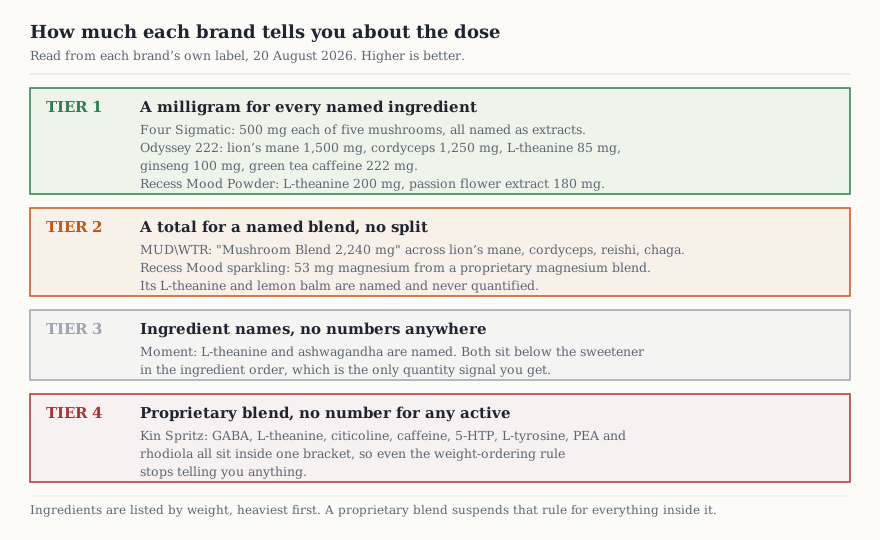
| Four Sigmatic Original Mushroom Coffee | Instant powder, 30 servings | $17.01 Amazon / $50.00 direct | $0.57 | Tier 1, 500 mg each of five named mushrooms |
| Recess Mood Powder | Powder, 30-serving tub | $30.00 direct | $1.00 | Tier 1, L-theanine 200 mg, passion flower 180 mg |
| MUD\WTR Original | Loose powder, 30 servings | $40.00 refill / $49.99 Amazon | $1.33 | Tier 2, one 2,240 mg blend, no split |
| Recess Mood | Sparkling can, 12 pack | $32.97 Amazon / $36.00 direct | $2.75 | Tier 2, 53 mg magnesium, theanine unquantified |
| Moment | Sparkling can, 12 pack | $33.24 Amazon / $40.00 direct | $2.77 | Tier 3, ingredient names only |
| Odyssey 222 | Sparkling can, 12 pack | $34.85 Amazon / $35.99 direct | $2.90 | Tier 1, and 222 mg of caffeine |
| Kin Spritz | Sparkling can, 24 pack | $90.00 direct. Amazon is worse | $3.75 | Tier 4, proprietary blend, no numbers |
The rule that makes this readable
Food ingredients in the United States are listed by weight, heaviest first. That rule is doing a lot of quiet work. It means that even when a brand refuses to print a milligram, the position of the adaptogen on the list still tells you something true.
Here is Moment’s reishi orange can, in the brand’s own order: filtered water, orange juice concentrate, erythritol, citric acid, acacia gum, L-theanine, monk fruit extract, ashwagandha, orange oil, ascorbic acid, stevia leaf extract, reishi.
Reishi is last. On a can named after reishi. Behind the stevia.
That is not an accusation of anything illegal, and Moment is not unusual. It is the category. But it is the single most useful thing you can learn in ten seconds in a grocery aisle, and almost nobody tells you to look.
The short answer, by what you actually want
Best overall, and it is not close: Four Sigmatic Original Mushroom Coffee
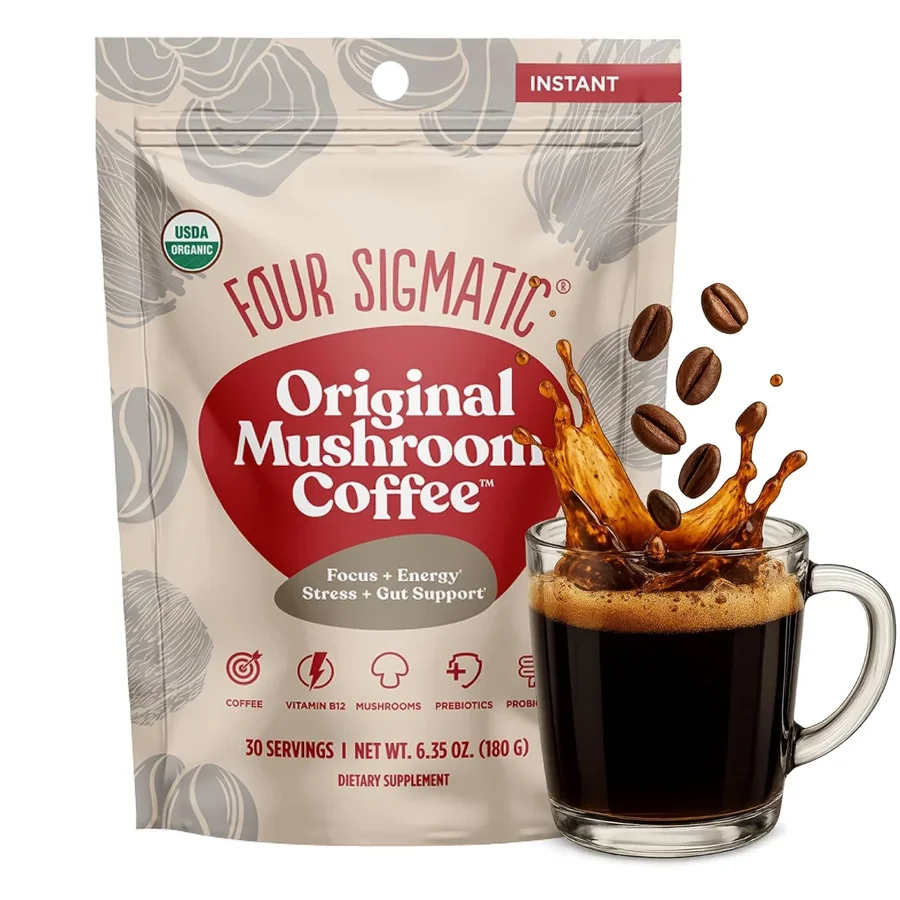
It is the only product here that names five mushrooms and gives each one its own number: 500 mg apiece of lion’s mane, chaga, turkey tail, reishi and cordyceps, all specified as extracts. Fifty milligrams of caffeine, about half a cup of drip coffee.
And then there is the price. It is $50.00 on Four Sigmatic’s own store and $17.01 on Amazon, for the identical 30-serving product. That is 57 cents a cup against $1.67, and it makes the best-labelled thing in this category also the cheapest by a wide margin. Read the review.
The only serving that lands on a trial dose: Recess Mood Powder
$30.00 for a 30-serving tub, $1.00 a serving, and it publishes 200 mg of L-theanine. That is not approximately the studied dose, it is exactly the single dose used in the acute stress trials. Plus 180 mg of passion flower extract. Nothing else on this page can say that. Read the review.
Best daily ritual, if you like the taste of it: MUD\WTR Original
$1.33 a serving on the refill bag for a cacao and masala chai powder with 35 mg of caffeine. It publishes one honest number, “Mushroom Blend 2,240 mg”, and then declines to split it across four mushrooms. People who love this love the ritual more than the pharmacology, and that is a perfectly good reason to buy it. Read the review.
Best can, if you want the mushroom dose: Odyssey 222
1,500 mg of lion’s mane and 1,250 mg of cordyceps in a single can, printed per ingredient, which is far and away the most any ready-to-drink can here will admit to. Then read the other number: 222 mg of caffeine, which is more than a Red Bull. Odyssey used to sell itself as a mushroom elixir and now sells itself as functional energy. The caffeine is why. Read the review.
Best calm can: Recess Mood
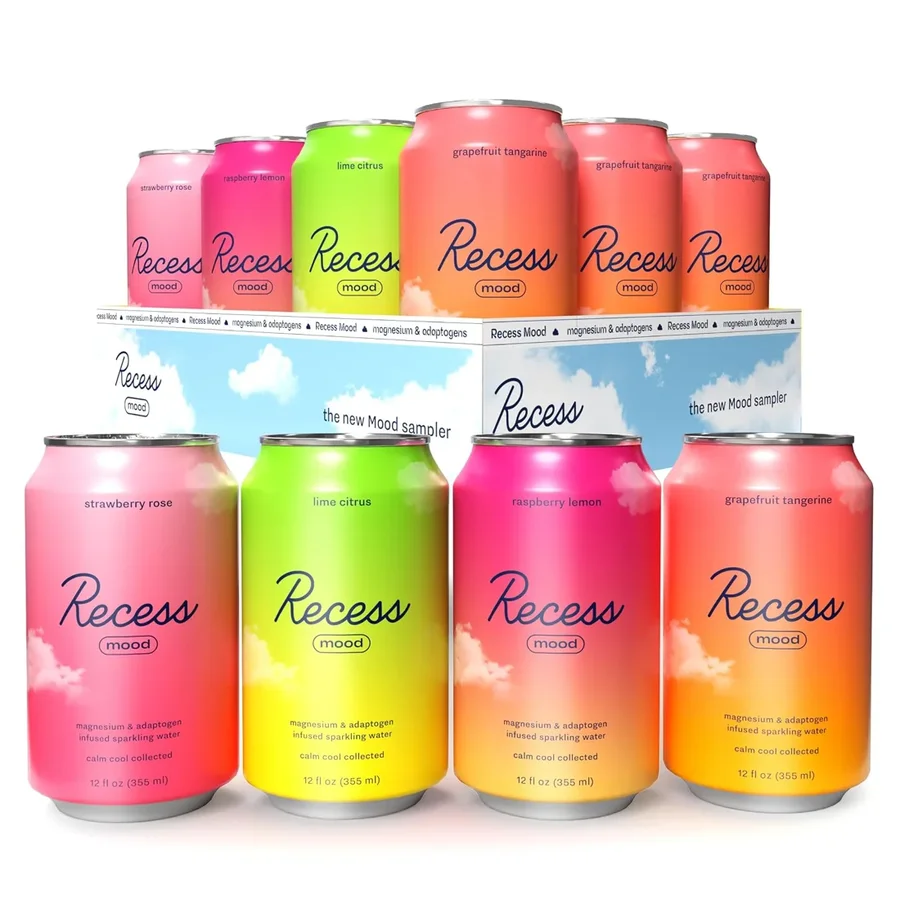
Caffeine free, 53 mg of magnesium published per can, and a genuinely good drink. It is a tier below its own powder, because the can names its L-theanine and never says how much. $2.75 on Amazon against $3.00 direct. Read the review.
Best tasting: Moment
Moment makes the drink we would put in a fridge for guests. It is also Tier 3: the L-theanine and the ashwagandha are named and never quantified, and on most of the range they sit below the sweetener. Buy it because you want a good non-alcoholic soda, not because you want a dose. Read the review.
The one we would skip: Kin Spritz
$3.75 a can at the best price we could find, and every single active is inside a proprietary blend: GABA, L-theanine, citicoline, caffeine, 5-HTP, L-tyrosine, PEA and standardised rhodiola, with no amount given for any of them. It is also the one product here where Amazon is more expensive, by 54 percent. Read the review.
What the trials actually used
The reason a milligram matters is that the studies these drinks borrow their credibility from used specific amounts, and those amounts are public.
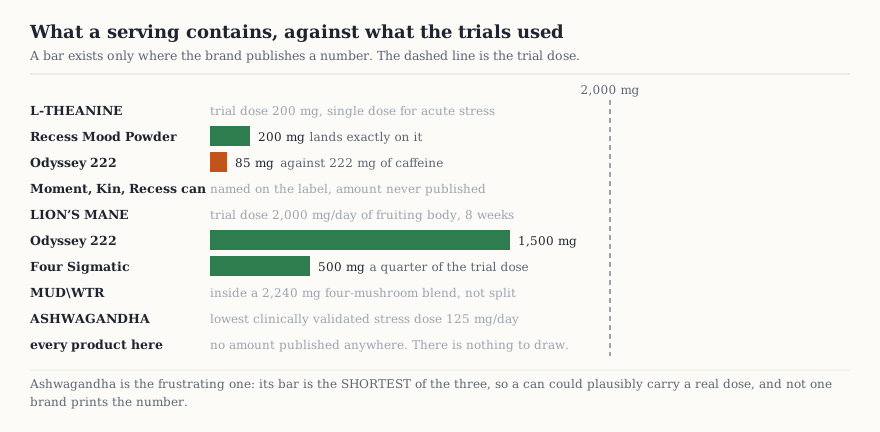
Ashwagandha has been studied for stress at 125 mg a day, which is the lowest dose with a controlled trial behind it, and at 225, 300 and 400 mg. L-theanine’s acute stress work runs around a single 200 mg dose. The 2026 lion’s mane trial used 2 g a day of fruiting body for eight weeks.
Line those up against the products. Recess Mood Powder’s 200 mg of L-theanine is the studied dose exactly. Odyssey’s 1,500 mg of lion’s mane is in the same conversation as a 2 g trial dose. Four Sigmatic’s 500 mg is a quarter of it. And for every drink that hides its ashwagandha there is no line to draw at all, which is the point.
Where you buy it changes the price more than which one you buy
This surprised us enough that it got its own page. The same Four Sigmatic tin is 66 percent cheaper on Amazon than on Four Sigmatic’s own store. Kin Spritz runs the other way: 54 percent more expensive on Amazon than buying direct.
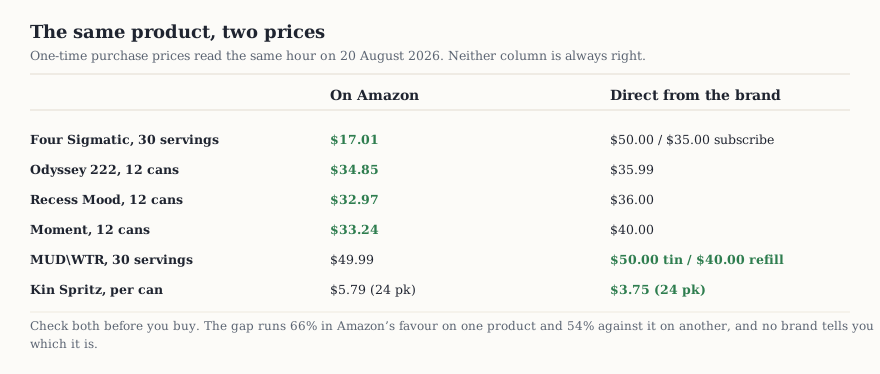
No brand tells you which way its own gap runs. We checked all seven.
What we are not going to tell you
We have not run a trial. Nobody here drank six weeks of anything and measured their cortisol, and any site that says it did is telling you a story. What we did is read seven labels carefully, price each one in two places, and put the numbers next to the published research so you can decide what you are buying.
Start with how to read one of these labels. It takes four minutes and it will outlast every product on this page.
Common questions
Do adaptogen drinks actually work?
Some of the ingredients have controlled trials behind them at particular doses. Whether a specific can delivers a comparable dose is usually unknowable, because most brands do not publish one. That gap, not the science, is the honest answer. Recess Mood Powder is the exception here: it publishes a dose that matches the trials.
Is a proprietary blend a red flag?
It is legal and common and it is not evidence of a bad product. It does mean you cannot compare that product to a study, or to a competitor, on anything but taste and price.
Powder or cans?
Powders are roughly a third to a half the price per serving and disclose more. Cans win on convenience and on being something you actually want to drink. We put the two formats side by side.
Are these safe?
For most healthy adults these are food ingredients at food amounts. Ashwagandha is the one to be careful with: it is not recommended in pregnancy and it interacts with thyroid and immunosuppressant medication. The 5-HTP in Kin Spritz interacts with SSRIs. Caffeine is the third, and Odyssey’s 222 mg can is the reason to check.